
What PTSD Accommodation Testing Covers for Parents
PTSD accommodation testing covers specific modifications to standardized test conditions that address the functional limitations PTSD symptoms create during high-stakes exams. These supports are legally required under the Americans with Disabilities Act when PTSD substantially limits a student’s test-taking abilities. For parents navigating the ACT, SAT, MCAT, LSAT, or similar exams, understanding what these accommodations include, how to document them, and how to apply for them is the difference between a fair test and a failed one.
What does PTSD accommodation testing cover?
PTSD testing accommodations are formal adjustments to test conditions that level the playing field for students whose PTSD symptoms interfere with performance. The ADA mandates that testing entities provide these modifications when a student’s condition substantially limits a major life activity, including concentration, memory, and processing speed. A PTSD diagnosis alone does not trigger accommodations. The key is demonstrating that specific symptoms create specific barriers during testing.
Common functional limitations that qualify include hypervigilance, intrusive thoughts, difficulty sustaining attention, slowed processing speed, and heightened startle responses. Each of these can derail a student mid-exam in ways that have nothing to do with their actual knowledge or ability. Accommodations for PTSD are designed to remove those barriers, not to give students an advantage.

The standard industry term for these supports is “testing accommodations,” and they fall under the broader category of psychiatric disability accommodations. Parents should use this language consistently when communicating with schools, evaluators, and testing boards.
What types of accommodations are available for PTSD?
The range of accommodations available for students with PTSD is broader than most parents realize. Testing entities tailor supports to the specific functional limitations documented, which means two students with PTSD may receive different accommodations based on their individual symptom profiles.
The most common accommodations include:
- Extended time: 50% extended time is the most frequently granted. Double time (100%) requires strong documentation showing severe limitations in processing speed or concentration.
- Private or reduced-distraction testing rooms: Students with hypervigilance or heightened startle responses benefit significantly from separation from large testing groups.
- Stop-the-clock breaks: These allow students to pause the exam clock to manage symptoms, take medication, or use a coping strategy without losing test time.
- Assistive technology: Screen readers, text-to-speech software, or speech-to-text tools address processing difficulties.
- Alternate test formats: Large print, digital formats, or oral administration may be appropriate depending on the student’s documented needs.
- Environmental adjustments: Specific seating arrangements, reduced noise levels, or permission to wear noise-canceling headphones address sensory sensitivities common in PTSD.
Pro Tip: Request the specific accommodations your child’s evaluator recommends in writing. Generic requests like “extra time” without a specified percentage are more likely to be denied or delayed.
Testing entities cannot deny accommodations solely based on cost or administrative inconvenience, as long as the accommodation does not fundamentally alter what the test measures. That is a critical protection parents should know before entering any review process.
One detail that surprises many families: accommodation records are confidential under the ADA. Score reports do not flag or mark results to indicate that accommodations were used. Your child’s privacy is protected throughout the process.
What documentation is required to secure PTSD accommodations?
Documentation is where most accommodation requests succeed or fail. Testing entities require clinical evidence that links your child’s specific PTSD symptoms to the specific cognitive demands of the exam. A diagnosis letter alone is not sufficient.
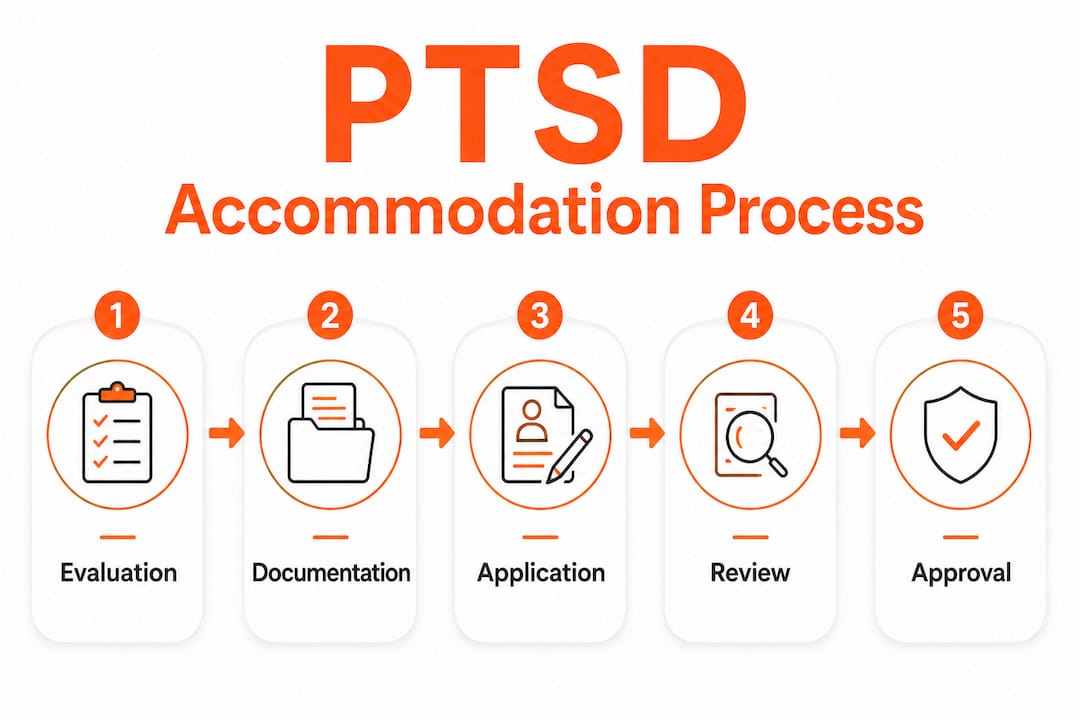
The documentation process typically involves these steps:
- Obtain a recent clinical evaluation. Most testing boards require evaluations completed within the past three to six months. Outdated reports, even from qualified professionals, are routinely rejected.
- Map symptoms to testing demands. The evaluator must explain how specific symptoms, such as slowed processing speed or intrusive thoughts, impair the student’s ability to perform under timed, high-pressure conditions.
- Include functional impairment details. The report must describe how PTSD affects daily functioning, not just general feelings of anxiety. Describing general feelings is insufficient; documentation must link specific impairments to exam demands.
- Attach a professional recommendation. The evaluator should explicitly recommend the accommodations they believe are necessary and explain the clinical rationale for each one.
- Prepare a personal statement. Parents should help students write a personal statement that connects their symptoms to their test-taking experience in concrete, specific terms.
Evaluations from qualified psychologists or neuropsychologists cost between $2,500 and $5,000 on average. That is a significant investment, and vague or incomplete reports make it a wasted one. Specificity is not optional. It is the single factor that most determines whether a request moves forward or stalls.
Pro Tip: Ask your child’s evaluator to use the exact language from the testing board’s accommodation guidelines when writing the report. This alignment reduces the chance of a request being returned for clarification.
Parents can use a structured documentation checklist to confirm that every required element is present before submitting. Missing one component can delay the entire review by weeks.
How do you apply for PTSD accommodations and handle the review?
The application process for PTSD testing accommodations follows a defined sequence, but the timeline and outcome depend heavily on preparation. Most testing entities, including those administering the ACT, SAT, MCAT, and LSAT, have their own portals and forms. The general process looks like this:
- Submit a formal accommodation request through the testing entity’s official channel. Include all clinical documentation, the personal statement, and any evaluator forms the board requires.
- Follow up promptly. Testing reviews often take weeks to months, and vague documentation causes delays and multiple follow-ups. Submit early and confirm receipt.
- Respond to requests for additional information quickly. Testing boards may ask for clarification or supplemental records. Slow responses extend timelines significantly.
- Know your appeal rights. If a request is denied, parents have the right to appeal. The accommodation request process is interactive, meaning the testing entity must engage with the family and consider alternative accommodations, not simply issue a flat denial.
- Request the specific reason for denial in writing. This is your foundation for an appeal and for strengthening the documentation before resubmission.
Understanding why college entrance exams allow accommodations helps parents frame their request correctly from the start. The legal obligation is clear: if PTSD substantially limits a student’s ability to take the test under standard conditions, the testing entity must act.
What parents should know about transferring accommodations between tests
Past accommodations carry weight, but they do not carry guarantees. Prior accommodations in school settings receive “considerable weight” from testing boards, but each standardized exam requires a fresh application with current evidence showing continued need. A 504 plan or IEP that granted accommodations in high school does not automatically transfer to the SAT, ACT, or any professional licensing exam.
The table below clarifies the key differences parents encounter when moving between accommodation contexts.
| Context | Accommodation type | Automatic transfer? |
|---|---|---|
| K-12 school (IEP or 504 plan) | School-based modifications | No. Must reapply for each standardized test. |
| College entrance exams (SAT, ACT) | Testing accommodations under ADA | No. Requires new application and current documentation. |
| Graduate admissions (MCAT, LSAT, GRE) | Testing accommodations under ADA | No. Each board has its own standards and review process. |
| Professional licensing exams | ADA accommodations, board-specific rules | No. Often requires the most detailed documentation of all. |
Testing boards require updated documentation per test, and prior approvals help but do not exempt reapplication. Parents who assume a school-based accommodation will carry forward often find themselves scrambling at the last minute. Start the process for each new exam well before the registration deadline.
Key Takeaways
PTSD testing accommodations require documented functional limitations, not just a diagnosis, and each standardized exam demands a separate application with current clinical evidence.
| Point | Details |
|---|---|
| ADA mandates accommodations | PTSD must substantially limit test-taking ability; diagnosis alone is not enough. |
| Common supports available | Extended time (50%–100%), private rooms, stop-the-clock breaks, and assistive technology are standard options. |
| Documentation must be specific | Reports must link PTSD symptoms directly to exam demands, not describe general anxiety. |
| No automatic transfer | School-based IEPs and 504 plans do not carry over to standardized testing boards. |
| Denials can be appealed | The ADA requires an interactive process; a denial is not always final. |
What I’ve learned about the PTSD accommodation process after years of working with families
The single biggest mistake I see parents make is treating the accommodation request as a medical formality. They gather a diagnosis, attach a letter from a therapist, and submit. Then they are surprised when the testing board sends it back.
Testing boards are not evaluating whether your child has PTSD. They are evaluating whether the documentation proves that PTSD creates a specific, substantial barrier to performing under standard test conditions. That is a different question entirely, and it requires a different kind of answer.
The families who succeed are the ones who treat the documentation as an argument, not a form. Every symptom named in the clinical report should connect directly to a testing demand. Hypervigilance connects to distraction sensitivity. Intrusive thoughts connect to sustained concentration. Slowed processing connects to timed performance. When that chain of logic is explicit and detailed, reviewers have what they need to approve the request.
I also want to be direct about appeals. Many parents give up after a first denial. That is understandable, but it is often premature. The ADA requires testing entities to engage in an interactive process. A denial is a starting point for negotiation, not a closed door. Push back with better documentation and a clear, specific appeal letter. Persistence, backed by specificity, wins more often than parents expect.
Finally, start earlier than you think you need to. Evaluations take time to schedule. Reports take time to write. Reviews take weeks to months. If your child is testing in the spring, the process should begin no later than the fall before.
— Roger
How Testaccommodations supports families navigating PTSD testing
Families dealing with a PTSD accommodation denial or a confusing first application do not have to work through it alone. Testaccommodations specializes in advising students and their families who are entitled to accommodations for standardized tests, including the ACT, SAT, MCAT, and LSAT, and who are facing denials or delays.
The team at Testaccommodations helps families understand exactly what documentation testing boards require, how to strengthen a clinical report, and how to build an effective appeal when a request is denied. The focus is on mental health conditions like PTSD, where the gap between a diagnosis and a successful accommodation request is often a matter of documentation quality and legal strategy. If your child has been denied or you are preparing a first request, Testaccommodations is the right place to start.
FAQ
What does PTSD accommodation testing cover?
PTSD accommodation testing covers formal modifications to standardized test conditions, including extended time, private testing rooms, stop-the-clock breaks, and assistive technology, designed to address the functional limitations PTSD symptoms create during exams.
Does a PTSD diagnosis automatically qualify a student for accommodations?
No. A diagnosis alone does not qualify a student. Documentation must demonstrate that PTSD substantially limits specific test-taking abilities, such as concentration, processing speed, or sustained attention, under standard exam conditions.
How long does the accommodation review process take?
Reviews typically take weeks to months depending on the testing entity and the completeness of the documentation. Submitting thorough, specific clinical reports early in the process reduces delays significantly.
Can a testing board deny accommodations if they are too expensive?
No. Testing entities cannot deny accommodations solely based on cost or administrative inconvenience, as long as the accommodation does not fundamentally alter what the test measures.
Do school-based accommodations transfer to standardized tests like the SAT or LSAT?
School-based accommodations under an IEP or 504 plan receive considerable weight but do not transfer automatically. Each standardized testing board requires a separate application with current documentation showing continued need.