
How to Request MCAT Accommodations Step by Step
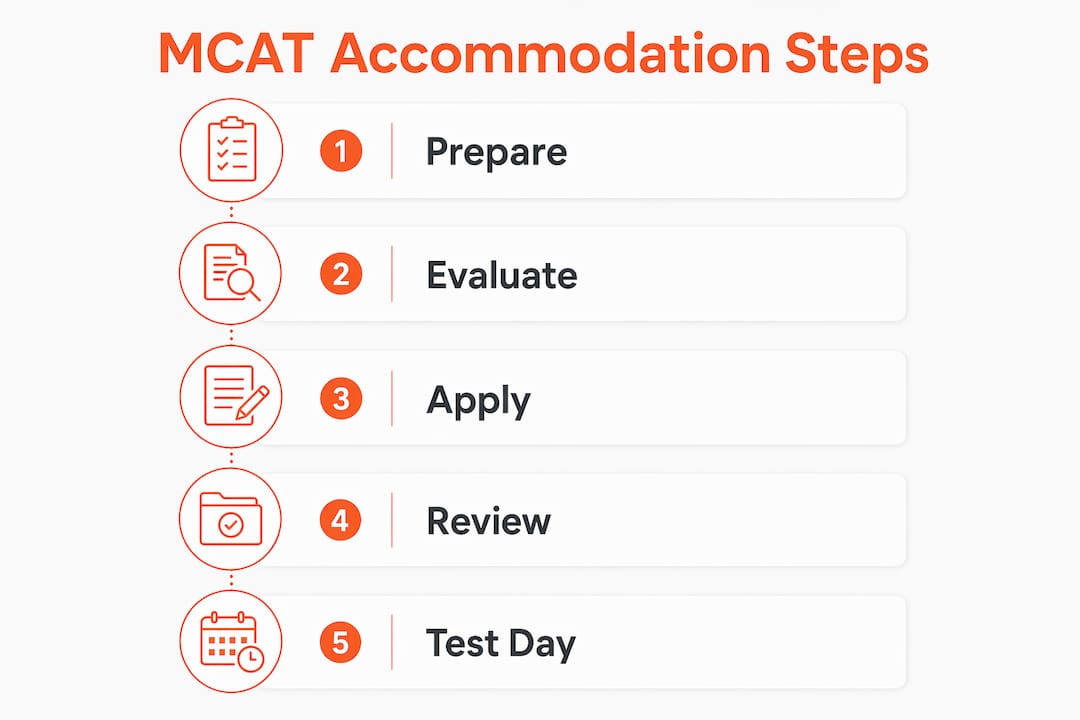
Requesting MCAT accommodations is defined as submitting a formal application through the AAMC’s online portal, supported by current clinical documentation that links your diagnosed condition to specific functional limitations in timed, high-stakes testing. The official term for this process is the AAMC Accommodations Request, and it governs every student seeking an accommodated MCAT exam. To request MCAT accommodation step by step, you need to gather documentation, complete the AAMC portal application, and schedule with Pearson VUE well before your test date. The MCAT accommodation process typically spans 4–5 months from start to finish, which means starting late is the single most costly mistake you can make.
What documentation do you need before applying for MCAT accommodations?
The foundation of any successful MCAT accommodations application is a current, comprehensive evaluation from a licensed medical or psychological professional. This evaluation must do more than confirm a diagnosis. It must explicitly connect your condition to the specific demands of the MCAT: a timed, multi-hour, high-pressure exam administered in a controlled testing environment.
Here is what your documentation package should include:
- A current psychoeducational or medical evaluation. The assessment must use adult norms and include performance validity tests. Functional limitation evidence must relate directly to the high-stakes, timed nature of the MCAT, not just general daily symptoms. Reports that describe only how a condition affects daily life, without connecting it to testing conditions, are routinely denied.
- Historical records. IEPs, 504 plans, and records of prior testing accommodations from the ACT, SAT, or other standardized tests strengthen your application. However, historical records like 504 plans are useful but do not substitute for a current, thorough evaluation following AAMC standards. Adult norms and functional limitations must be presented in modern assessments.
- A clear narrative linking diagnosis to MCAT-specific challenges. Your evaluator must explain why extended time, a separate testing room, or another accommodation is necessary given the length and format of the MCAT specifically.
- AAMC-compliant report structure. The AAMC publishes a guide called What Evaluators Need to Know. Most clinicians lack experience with AAMC’s specific requirements, and sharing this guide with your evaluator prevents incomplete reports that trigger denials.
Pro Tip: Schedule your evaluation appointment before you do anything else. Quality psychoeducational evaluations often have 4–8 week wait times, and a rushed or incomplete report is the leading cause of denial.
You can also review MCAT accommodations eligibility criteria to confirm what conditions and documentation types qualify before you invest in an evaluation.
How to submit your MCAT accommodation application through the AAMC portal
Once your documentation is in order, the mechanical steps for applying for MCAT accommodations through the AAMC portal are straightforward. Follow them carefully, because errors or omissions at this stage restart your timeline.
- Create or log into your AAMC account. Go to the AAMC website and access the Accommodations Request system. If you already have an account from a prior MCAT registration, use the same login.
- Select the correct request type. Choose MCAT, PREview, or both if applicable. Selecting the wrong exam type is a common clerical error that delays processing.
- Complete the profile section. Enter your personal information accurately. Any mismatch between your profile and your submitted documents can trigger a request for clarification, adding weeks to the review.
- Fill in the condition, history, and justification sections. Be thorough and honest. Describe your diagnosis, when it was identified, how it has been managed, and how it specifically affects your ability to perform under timed testing conditions. Vague answers here weaken an otherwise strong application.
- Upload all required documents digitally. The AAMC portal requires complete application submissions online. Do not mail paper copies. Confirm that every uploaded file is legible and complete before submitting.
- Submit and record your submission date. The AAMC’s review period is fixed at roughly 60 days with no expedited options. Knowing your submission date lets you calculate when to expect a decision.
Pro Tip: Before you hit submit, have a trusted advisor or clinician review your justification section. The AAMC treats this application like a legal document, and ambiguous language is treated as insufficient evidence.

When should you start the MCAT accommodation process?
Timing is the variable most students underestimate. The accommodation process should begin 4–5 months before your test date to allow for evaluations, documentation preparation, AAMC review, and potential appeals. Here is how that timeline breaks down:
| Stage | Estimated time needed |
|---|---|
| Clinical evaluation and report preparation | 4–8 weeks |
| AAMC portal application completion | 1–2 weeks |
| AAMC review period | 60 days (fixed) |
| Reconsideration or appeal period (if needed) | Up to 30 days |
| Pearson VUE scheduling window | At least 15 days before exam |
The math is unforgiving. Even a smooth process with no appeals takes roughly 75 days from submission to scheduling. Add the evaluation wait time, and you are looking at 4 months minimum.
Key timing rules to follow:
- Start your clinical evaluation no later than 5 months before your target test date.
- Submit your AAMC application as soon as your documentation is complete. Every week of delay compresses your buffer.
- Build in a 30-day buffer for reconsideration. Partial approvals and requests for additional information are common and add time. You may receive approval for some accommodations but not others, requiring a response.
- Call Pearson VUE manually after approval. After AAMC approval, you must contact Pearson VUE at least 15 days before the test to schedule your accommodated exam. This step is not automatic. Missing it means your accommodations will not be implemented on test day.
What are the most common mistakes when applying for MCAT accommodations?
Even well-prepared students fall into predictable traps during the MCAT accommodation process. Knowing these pitfalls in advance gives you a real advantage.
- Submitting outdated documentation. An evaluation from high school or early college may have supported a 504 plan, but it will not satisfy AAMC standards for an adult applicant. Old accommodations do not guarantee new approval, and fresh evaluations targeting the MCAT context are required.
- Documentation that describes symptoms but not functional limitations. The AAMC does not approve accommodations based on diagnosis alone. Your report must explain specifically how your condition impairs your ability to complete a timed, multi-section exam. A report that says “patient has ADHD” without connecting that diagnosis to testing performance will be denied.
- Misreading the timeline. Many students assume they can submit an application 6–8 weeks before their exam and still receive a decision in time. The fixed 60-day review period makes that impossible.
- Ignoring partial approvals. If the AAMC approves extended time but denies a separate testing room, you have options. Appeal and reconsideration requests focus on missing or unclear evidence and must be handled within narrow timeframes. Act promptly and do not treat a partial approval as a final answer if you need additional support.
- Forgetting to schedule with Pearson VUE. Approval from the AAMC does not automatically place you in an accommodated testing session. This manual scheduling step is a common bottleneck that catches students off guard.
“Treating the MCAT accommodations application like a legal contract, not a casual form, is the mindset shift that separates approvals from denials.”
If you are facing a denial or partial approval, Testaccommodations recommends reviewing the SAT accommodation appeals guide for a detailed look at how appeal procedures work across standardized tests, since the underlying principles apply to MCAT reconsiderations as well.
Key Takeaways
Securing MCAT accommodations requires current functional-limitation documentation, a complete AAMC portal submission, and a 4–5 month timeline that accounts for review, potential appeals, and manual scheduling with Pearson VUE.
| Point | Details |
|---|---|
| Start 4–5 months early | The AAMC review alone takes 60 days, and evaluations add 4–8 more weeks. |
| Documentation must be current | Old IEPs and 504 plans support but do not replace a new, AAMC-compliant evaluation. |
| Connect diagnosis to MCAT conditions | Reports must link your condition to timed, multi-hour testing, not just daily symptoms. |
| Partial approvals require action | Respond promptly to requests for additional information to avoid missing testing windows. |
| Schedule Pearson VUE manually | AAMC approval does not auto-schedule your accommodated exam; call Pearson VUE yourself. |
What I have learned from working with MCAT accommodation applicants
Working with students through the MCAT accommodations process has shown me one consistent pattern: the students who struggle most are not the ones with weaker cases. They are the ones who started too late or handed their clinician a vague request with no guidance on what the AAMC actually needs.
The AAMC’s What Evaluators Need to Know guide is not optional reading for your clinician. It is the difference between a report that gets approved and one that sits in a pile of denials. I have seen strong, well-documented cases fall apart because the evaluator used outdated norms or failed to address MCAT-specific stressors. Giving your clinician that guide upfront is the single highest-leverage action you can take before submitting.
I also want to be direct about Pearson VUE: do not assume the process is finished once you receive AAMC approval. That phone call to Pearson VUE is not a formality. Students who skip it or delay it have shown up to test centers without their accommodations in place. Make the call the same week you receive your approval letter.
Finally, if you receive a denial or a partial approval, do not panic. The reconsideration process exists precisely because documentation gaps are common. Act within the timeframe, address the specific deficiency the AAMC identified, and submit a focused response. A denial is not the end of the road. It is a request for more information.
— Roger
How Testaccommodations can support your MCAT application
Navigating the MCAT accommodations process alone is possible, but it is also where small errors become costly delays.

Testaccommodations works directly with students and families who are entitled to testing accommodations and have received denials or partial approvals. Whether you need help understanding what documentation the AAMC requires, guidance on how to frame your functional limitations, or support through a reconsideration process, Testaccommodations provides expert advice grounded in real case experience. Visit Testaccommodations to explore resources, review documentation standards, and get the support you need before your application deadline closes.
FAQ
What qualifies you for MCAT accommodations?
MCAT accommodations eligibility requires a documented disability or medical condition that creates a functional limitation in timed, high-stakes testing. A current evaluation from a licensed professional that explicitly connects your diagnosis to MCAT testing conditions is required.
How long does the MCAT accommodation process take?
The full process takes 4–5 months when you account for clinical evaluation, AAMC’s fixed 60-day review, and the 15-day Pearson VUE scheduling window. Appeals or requests for additional information can add another 30 days.
Can I use my old IEP or 504 plan as my primary documentation?
No. Historical records like IEPs and 504 plans support your application but do not replace a current evaluation. The AAMC requires adult-normed assessments that address your present functional limitations in the context of MCAT testing.
What happens if my MCAT accommodation request is denied?
You can submit a reconsideration request within the AAMC’s specified timeframe, addressing the specific deficiency identified in your denial. This is not a full restart of the process; it focuses on the missing or unclear evidence the AAMC flagged.
Do I need to contact Pearson VUE after AAMC approves my accommodations?
Yes. AAMC approval does not automatically schedule your accommodated exam. You must call Pearson VUE at least 15 days before your test date to confirm your accommodations are in place for that session.