
How Disability Diagnosis Affects Test Scores: 2026 Guide
A disability diagnosis directly reduces standardized test scores by impairing the cognitive processes tests measure, not the underlying intellectual ability of the student. This distinction matters enormously for parents and educators trying to make sense of results from the ACT, SAT, MCAT, LSAT, or any psychoeducational evaluation. Understanding how disability diagnosis affects test scores is the first step toward interpreting those numbers accurately and securing the accommodations students are legally entitled to under the Americans with Disabilities Act (ADA). Raw scores alone tell an incomplete story. The real picture requires context, documentation, and advocacy.
How disability diagnosis affects test scores through cognitive deficits
A disability diagnosis signals that specific cognitive processes are impaired. Those same processes are precisely what standardized tests demand. The result is a score gap that reflects testing barriers, not intellectual limits.
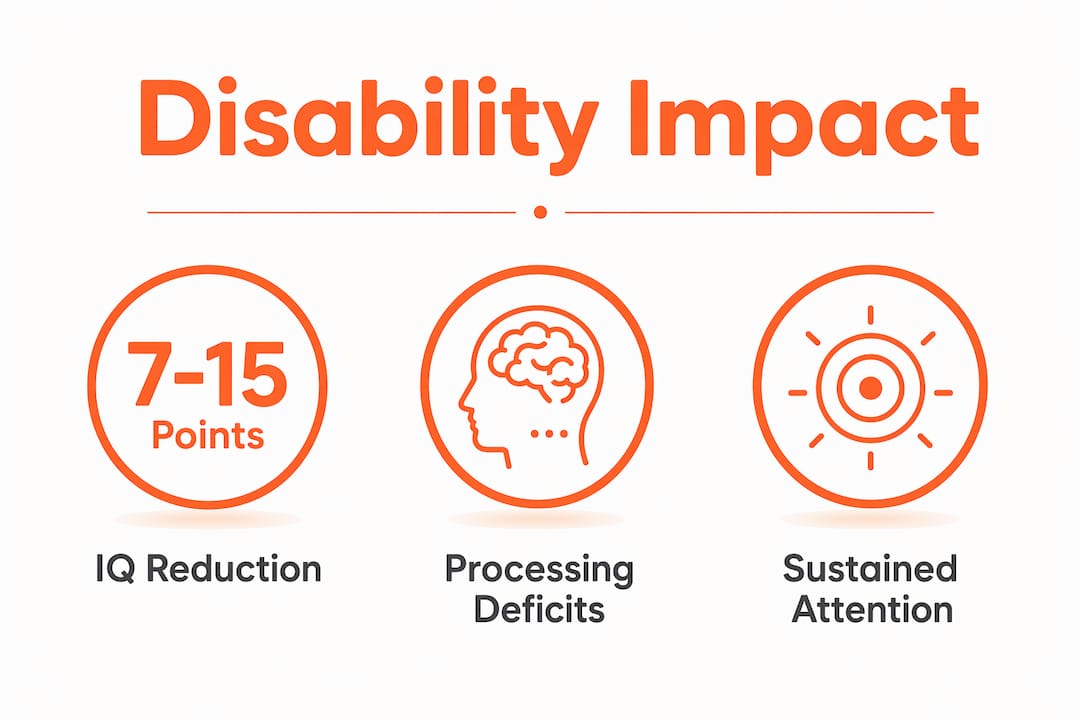
Three deficits appear most consistently across disability categories:
- Processing speed: Students with ADHD, dyslexia, and other learning disabilities process written information more slowly. Timed tests penalize this directly, regardless of comprehension.
- Working memory: Holding and manipulating information in real time is a core demand of math and reading sections. Deficits here reduce accuracy under standard conditions.
- Sustained attention: Long test sessions require continuous focus. Students with ADHD or anxiety disorders lose accuracy as fatigue accumulates across sections.
Studies show that processing deficits reduce IQ scores by 7–10 points for students with ADHD and by 5–15 points for students with various learning disabilities. That range represents a meaningful gap between measured performance and true capacity. Students are not scoring lower because they know less. They are scoring lower because the test format creates barriers their peers do not face.
ADHD produces a particularly telling pattern called the ACID profile. Students show depressed sub-scores on Arithmetic, Coding, Information, and Digit Span tasks, even when their reasoning scores are average or above average. This profile helps evaluators isolate executive function deficits from actual reasoning ability. It is one of the clearest examples of how disability and academic performance diverge on paper.

Pro Tip: When reviewing a psychoeducational evaluation, ask the evaluator to identify the processing speed and working memory index scores separately from the Full Scale IQ. The gap between those scores is often the most important number on the page.
What score differences look like across different standardized tests
The impact of disability on scores is not limited to school-based assessments. It appears across every major testing format, from childhood IQ evaluations to professional licensing exams.
| Test Type | Population | Observed Impact |
|---|---|---|
| Full Scale IQ (WISC, WAIS) | Students with ADHD or SLD | 7–15 point reduction from processing deficits |
| USMLE Step 2 CK | Medical students with disabilities | 9–11 point lower score vs. nondisabled peers |
| Reading and math assessments | Students with dyslexia or dyscalculia | Significant gaps vs. grade-level norms |
| Timed standardized tests (ACT, SAT) | Students with processing speed deficits | Scores reflect format barriers, not content knowledge |
Medical students with registered disabilities scored 9–11 points lower on the USMLE Step 2 Clinical Knowledge exam than their nondisabled peers. That difference represents approximately 0.7 standard deviations. It is large enough to affect licensing outcomes, residency placement, and career trajectories, which is why accommodation access at the professional level carries the same urgency as it does in high school.
Test format compounds the problem. Students consistently perceive timed, in-person assessments as less inclusive and report that those formats undermine their performance compared to alternative formats. This is not a perception problem. The format itself creates construct-irrelevant difficulty, meaning the test ends up measuring a student’s ability to cope with the format rather than their mastery of the content.
Students with Cortical Visual Impairment (CVI) illustrate this point sharply. Their low scores often reflect visual fatigue, not fixed cognitive limits. Standard cognitive tests built for neurotypical visual processing produce results that are systematically misleading for this population. The same logic applies across disability categories: standardized tests underestimate intellectual capacity when the format itself is inaccessible.
What legal protections govern testing for students with disabilities?
The ADA sets the legal floor for testing fairness. Under its requirements, testing entities must provide accommodations that allow scores to reflect a student’s actual ability, not their disability’s interference with the test format.
Key protections include:
- Score validity: The ADA requires that accommodated test scores reflect the skill being measured, not the impact of a disability on an inaccessible format.
- Anti-flagging rules: Testing organizations cannot flag scores to indicate that accommodations were used. Flagging discourages students from requesting accommodations they are entitled to, and the ADA prohibits it.
- Reasonable accommodations: Extended time, separate testing rooms, screen readers, and scribes are among the accommodations testing organizations must provide when documentation supports the need.
“Accommodations remove construct-irrelevant barriers like fatigue or reading speed, ensuring equity rather than advantage.” — ADA guidance on testing accommodations
The misconception that accommodations give students an unfair advantage is persistent and wrong. Accommodations remove barriers unrelated to what the test is designed to measure. A student who receives extended time because of a processing speed deficit is not gaining an advantage over peers. They are receiving the conditions necessary for the test to measure what it claims to measure.
Intellectual Disabilities (ID) carry odds ratios from 4.11 to 11.9 for poor academic performance, making them the strongest predictor of academic impairment among neurodevelopmental conditions. ADHD and Specific Learning Disabilities (SLD) are also significant predictors. These numbers underscore why accommodation eligibility criteria must be taken seriously, not treated as a bureaucratic hurdle.
How should parents and educators interpret and act on test scores?
Test scores for students with disabilities are best understood as minimum ability estimates, not ceilings. They show what a student can do under conditions that may actively work against them. Treating a low score as a fixed measure of capacity leads to under-placement, reduced expectations, and missed opportunities for appropriate support.
Here is a practical framework for interpreting and acting on scores:
- Compare index scores, not just totals. A Full Scale IQ score can mask a 30-point gap between reasoning ability and processing speed. Request the full score report and review each index separately.
- Cross-reference with classroom performance. A student who performs well in class but scores poorly on timed tests is showing you exactly where the barrier lies. Document this pattern in writing.
- Gather behavioral and observational data. Teacher reports, IEP progress notes, and 504 plan documentation all strengthen an accommodation request. Testing organizations expect a multi-source picture.
- File accommodation requests early. The College Board’s Services for Students with Disabilities (SSD) and ACT’s accommodation process both require documentation submitted well before test dates. Late requests are routinely denied on procedural grounds alone.
- Appeal denials with specificity. A denial is not a final answer. Testaccommodations specializes in helping families respond to denials with the documentation and legal framing that testing organizations require.
Pro Tip: Ask your student’s evaluator to include a specific statement connecting the diagnosed disability to functional impairment on timed, standardized tests. Generic diagnostic language rarely satisfies testing organization reviewers. Functional impairment language does.
One critical gap that parents and educators often miss: having accommodations approved on paper does not guarantee they will be implemented correctly on test day. Logistical and environmental barriers reduce the effectiveness of accommodations in real testing scenarios. Scheduling errors, inadequate testing rooms, and undertrained proctors all drag down scores even when the legal paperwork is in order. Confirming accommodation details with the testing site directly, in writing, at least two weeks before the test date is a step that too many families skip.
Key Takeaways
A disability diagnosis reduces test scores by creating processing barriers, not by limiting intelligence, and accommodations exist specifically to correct that imbalance.
| Point | Details |
|---|---|
| Scores reflect barriers, not ability | Processing deficits reduce scores by 7–15 points without affecting true intellectual capacity. |
| ACID profile identifies ADHD impact | Depressed sub-scores in Arithmetic, Coding, Information, and Digit Span isolate executive function deficits from reasoning ability. |
| ADA prohibits score flagging | Testing organizations cannot mark scores to indicate accommodation use, protecting students from stigma. |
| Paper approvals are not enough | Confirmed, in-writing accommodation logistics must be verified with the test site before exam day. |
| Scores are floors, not ceilings | Treat low scores as minimum estimates and combine them with classroom data for accurate interpretation. |
What I’ve learned from watching families fight for accurate score interpretation
The most damaging mistake I see parents make is accepting a low score as the definitive word on their child’s ability. Raw scores carry authority they have not earned when the test conditions were inaccessible to begin with.
The second mistake is assuming that an approved accommodation request closes the loop. I have seen students arrive at test centers where proctors had no record of their extended time approval, where the “separate room” was a hallway, and where the testing materials were not formatted correctly for a student with a visual processing disorder. The gap between what the law requires and what actually happens on test day is real, and it costs students points they cannot get back.
What actually works is treating the accommodation process as an ongoing advocacy effort, not a one-time form submission. That means reviewing best practices for testing students with disabilities, documenting every communication with testing organizations, and being prepared to appeal. Families who approach this process with that mindset consistently get better outcomes than those who assume the system will work correctly on its own.
The scores matter. The accommodations matter more. And the follow-through matters most of all.
— Roger
When test scores do not tell the full story, Testaccommodations can help
Families who have received accommodation denials from the College Board, ACT, MCAT, or LSAT organizations often do not know that a denial is not final. Testaccommodations advises students and families who are entitled to accommodations and have been turned away, helping them build the documentation and legal arguments that testing organizations are required to consider.

If your student’s scores do not reflect their ability, or if an accommodation request has been denied, Testaccommodations provides direct guidance on securing test accommodations through the appeals process. The team understands what reviewers look for, what documentation gaps cause denials, and how to close those gaps effectively. You do not have to accept a denial as the final answer.
FAQ
How does a disability diagnosis lower standardized test scores?
A disability diagnosis signals impairments in processing speed, working memory, or sustained attention. These are the same functions standardized tests demand, so scores drop even when underlying knowledge and reasoning ability are intact.
Are test scores for students with disabilities accurate measures of ability?
No. Standardized tests often underestimate intellectual capacity for students with processing disabilities because the test format itself creates barriers unrelated to the content being assessed.
Do accommodations give students with disabilities an unfair advantage?
Accommodations remove barriers unrelated to what the test measures, such as reading speed or fatigue. They do not provide an advantage; they create the conditions necessary for the test to measure what it is designed to measure.
What should I do if my child’s accommodation request is denied?
A denial is not final. Gather functional impairment documentation from your evaluator, confirm that the language connects the diagnosis to standardized testing specifically, and file a formal appeal. Testaccommodations specializes in guiding families through this process.
How do I know if my child qualifies for accommodations?
Accommodation eligibility requires documentation of a diagnosed disability and evidence of functional impairment in the testing context. A psychoeducational evaluation completed by a licensed professional is typically the core requirement.